
All Stories
The Tsukiji (築地市場 Tsukiji shijō) fish market has been located in the Chuo district of Tokyo city since 1923. It is the largest fish market in the world and one of the largest markets across all commodities. Given the price of land in such a central area of Tokyo and the fact that the 2020 Summer Olympics will require the construction of additional infrastructure , the market will eventually be moved to nearby Toyosu. While the initial date of the move was September 7th, 2016, it has recently been pushed back due to cost and health concerns. Event though, the market will inevitably close eventually so I got up early one Saturday and went to shoot some videos of the site before the Tsukiji market goes to posterity.

We know that often, Japanese adaptations of places or concepts from abroad tend to end up with more than a little Disneyland twist than being faithful descriptions of reality. What is less known is the fact that the Japanese also have the tendency to pass their own culture through the mill of what they refer to as "Amuse", in other words, entertainment. The example I would like to introduce today is the Onsen Monogatari Oeodo, the reconstruction of a traditional public bath of the Edo period, but with Theme Park approach...

Wakimachi City is located in the Tokushima Prefecture in the eastern part of the Shikoku Island. Shikoku is the smallest of the four Japanese main islands and it is connected to the largest, Honshu, by the Onaruto and Akashi-Kaikyo bridges. During the Edo and Meiji eras, Wakimachi was a very prosperous city of merchants, mainly thanks to its central position in the distribution of indigo (Aizome, 藍染 め) via the Yoshino River. Practitioners of traditional Japanese martial arts are familiar with Aizome since it is the dye that is used for making items like hakama and some dogi. For non-martial art practitioners, one of the great attractions of the city is its Mainakashima neighborhood that has maintained the former residences of the Aizome merchants in their original form, in particular their udatsu that consist of two columns built on each side of the facades first floor.

Originally built in order to provide a centralized radio and TV transmission facility during the communication boom of the late 1950's, the 333 meters tall Tokyo Tower (東京タワー) was, up to very recently, the tallest free-standing framework tower in the world. It held this record until it was beaten by the new Tokyo Sky Tree when it reached its full height in 2011. Built in 1958 based on the design that French engineer Gustave Eiffel used for the construction of the Eiffel Tower in Paris, Tokyo Tower topped its predecessor by 13 meters. Another distinction notable between the two sister towers is that Tokyo Tower was painted in white and orange in order to comply with air traffic regulations.

People who first travel to the Tokyo region might find difficult to believe that merely 100 km from the megalopolis lie some of the most beautiful beaches in Japan. The Izu Peninsula (Izu Hanto) is located south-west from Tokyo and it has a lot to offer in terms of scenic mountain and coastal landscapes, paradise beaches and traditional holiday resorts such as ryokan (tradiout of stional Japanese inns) and onsen (hot springs). Obviously, this makes it a destination of choice for the Tokyoite during weekends and spring or summer breaks. Apart from these considerations, the Izu peninsula has counted very little in the unfolding of Japanese history is until quite recently. When Izu finally did come into play through Shimoda, one of its most southern cities, it changed the whole country and its people forever. The events that took place there in 1854 are nothing less than Japan's first opening of the outside world after more than 200 years of Sakoku policy of isolationism. It also provoked the subsequent fall of the millenarian military regime of the Shogun, and the uncanny return of the Emperor as ruler of the country during the Meiji restoration (1868).

Enoshima Island is a small island off the eastern coast of Japan in the Sagami Bay, not far from the city of Kamakura in the Kanagawa prefecture. The island has a circumference of about four kilometers and it is linked to the main land by the 600m Enosima-ohashi Bridge which runs parallel to the Katagase-gawa River. From Kamakura, the Enoshima Dentetsu train bound westwards for Fujisawa will bring you to Katase-Enoshima station in less than half an hour while allowing you to enjoy the coastal scenery at a relatively measured pace. From Katase-Enoshima station, you will just have to walk south-west for a few minutes and cross the Enosima-ohashi Bridge.

When staying in Tokyo for a restricted amount of time, one might wish to escape the somewhat overwhelming cityscape and enjoy a bit of countryside while not necessarily spending valuable time in transports, or money in extra accommodation. The option of a day trip is therefore one to be considered but where to go when Tokyo is known to spread endlessly over miles and miles? One perfect location for such a trip is the Mount Takao. A very popular weekend destination for many Tokyoites, Mount Takao is located about 50 km east from central Tokyo within the Meiji no Mori Takao Quasi-National Park near the city of Hachioji.

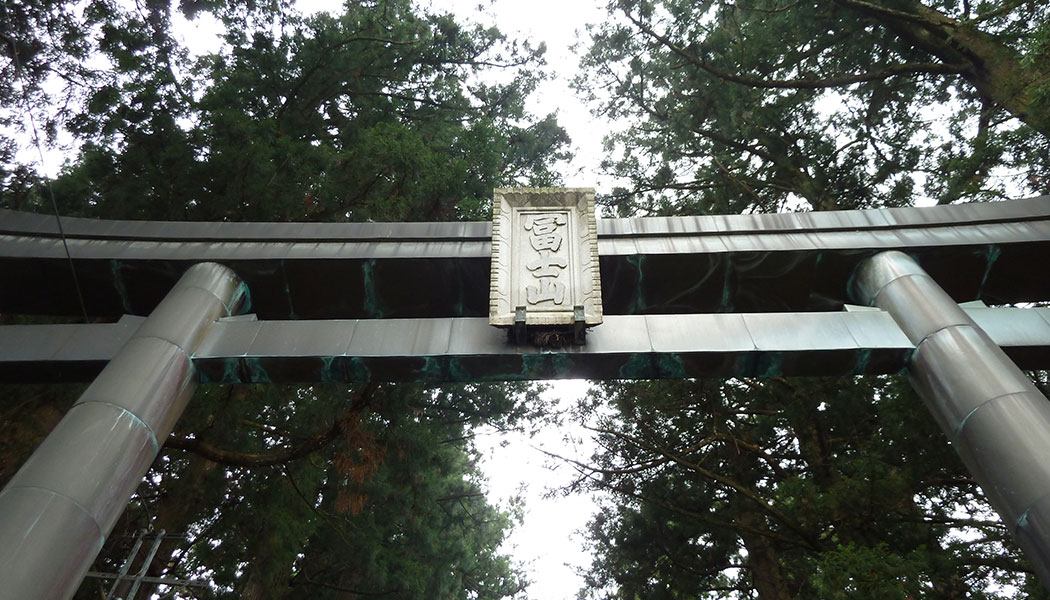
One thing for sure about Japan is that it isn't short of enchanting places. While most of the notable attractions are fairly well documented on the Internet and in tourist's guides, every now and then, you can unexpectedly discover one of such beautiful places. This happened to me on a Sunday evening while I was driving back from a trek near Mount Fuji. I was eager to get back to Tokyo early enough in order to avoid traffic jams but on the way, I spotted a peculiar place which inspired me to stop and take a look at. As I exited the car, I realized that I had indeed stopped in front what looked like a Shinto shrine, so I took my camera and decided to take a few pictures from the roadside. I soon figured out that this place was well worth a proper viewing.
About
Official website of Guillaume Erard, author, instructor and videographer permanent resident of Japan - 6th Dan Aikido from the Aikikai Foundation, Aikido Hombu Dojo in Tokyo / 5th Dan Daito-ryu Aiki-jujutsu from the Shikoku Hombu Dojo.
Menu
Most read
- Roundtable Discussion with Doshu and Students from Abroad
- How to Get a Working Holiday Visa in Japan?
- The History of Aiki: From Daito-ryu Jujutsu to Daito-ryu Aikijujutsu - A Thorough Look Into the Secret Scrolls of Daito-ryu Part 5
- A Thorough Look At the Secret Scrolls of Daito-ryu Part 1: Technical Contents
- The Evolution of Basic Daito-ryu and Aikido Curriculum - A Thorough Look Into the Secret Scrolls of Daito-ryu Part 3